
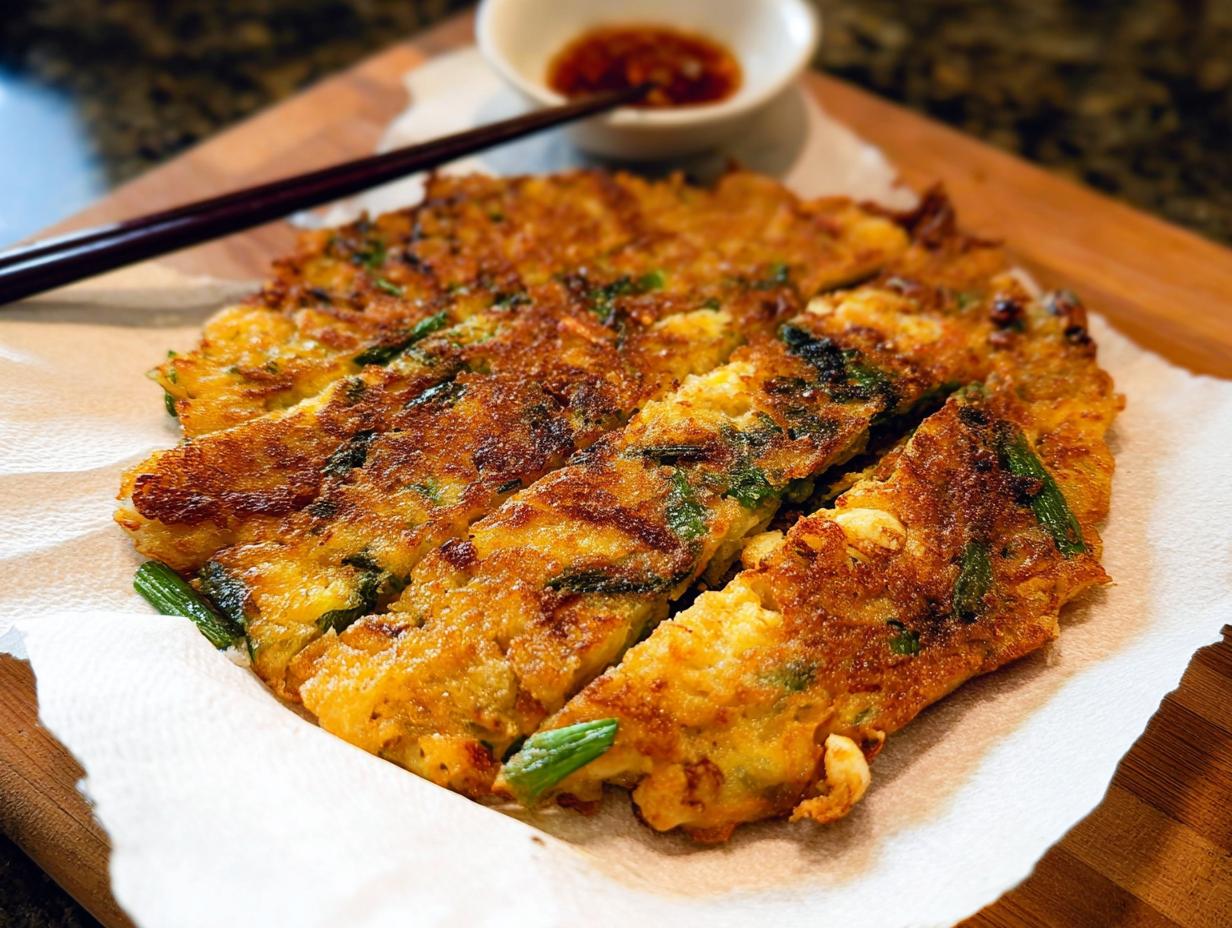
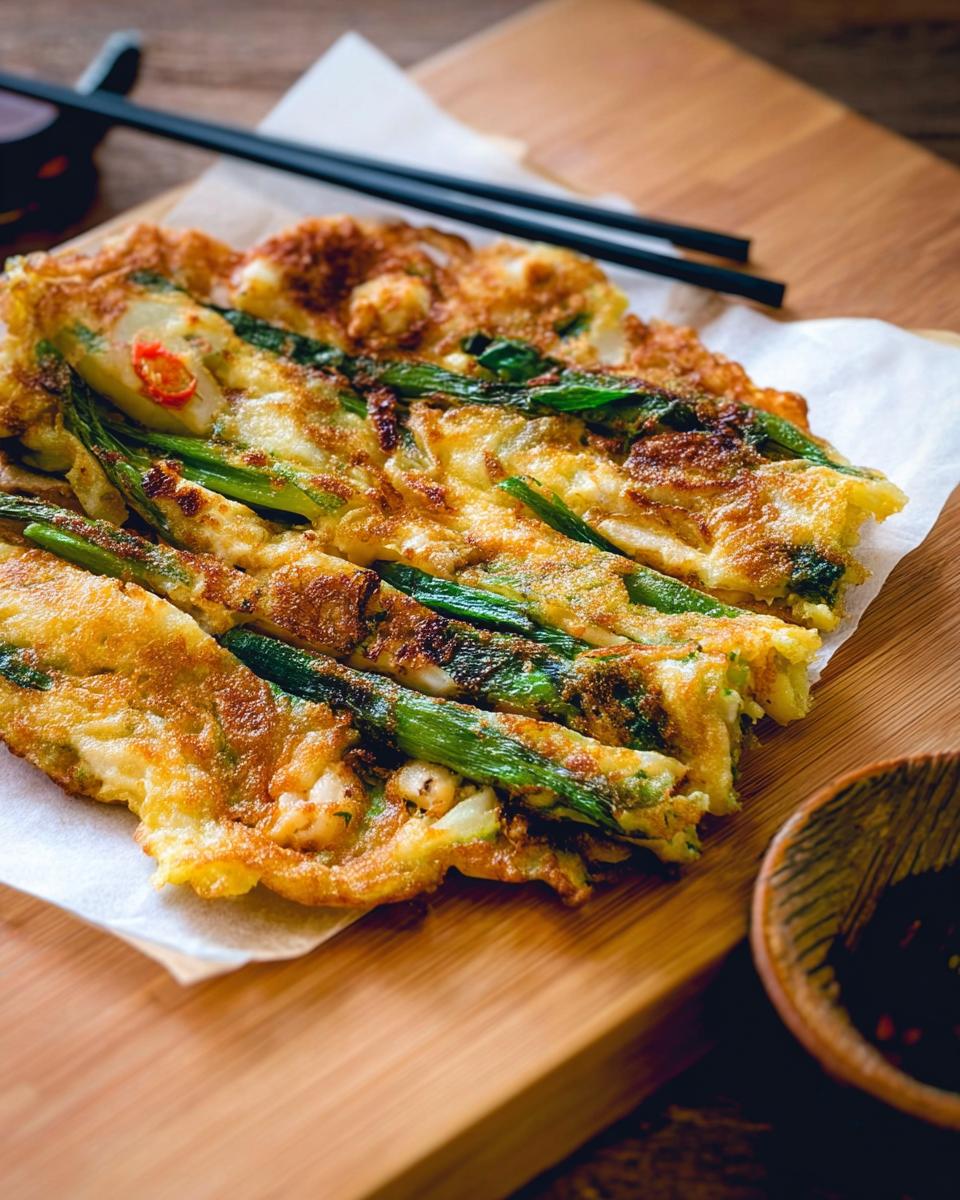
Oh, these Korean Pancakes, or Pajeon as we lovingly call them, are seriously a game-changer! They’re just so darn versatile – perfect as a snappy appetizer or a hearty main course. And let me tell you, getting that crispy-chewy texture at home is easier than you think. I still remember the Sunday mornings when my family would gather around the table, the smell of sweet maple syrup and fresh blueberries filling the air. Well, okay, that was for my French Toast Casserole, but similar magic happens when I make these pajeon! One particular morning, while unpacking from a chaotic move, I whipped up my version of these Korean Pancakes (Pajeon) in hopes of finding a moment of calm amid the chaos. As they sizzled in the pan, filling my kitchen with that incredible aroma, it transported me back to simpler times. Each bite was a reminder that even in the midst of upheaval, the joy of cooking can bring comfort and nostalgia, making little moments with loved ones truly special. Trust me, this recipe is simple, packed with flavor, and will be a hit every single time!
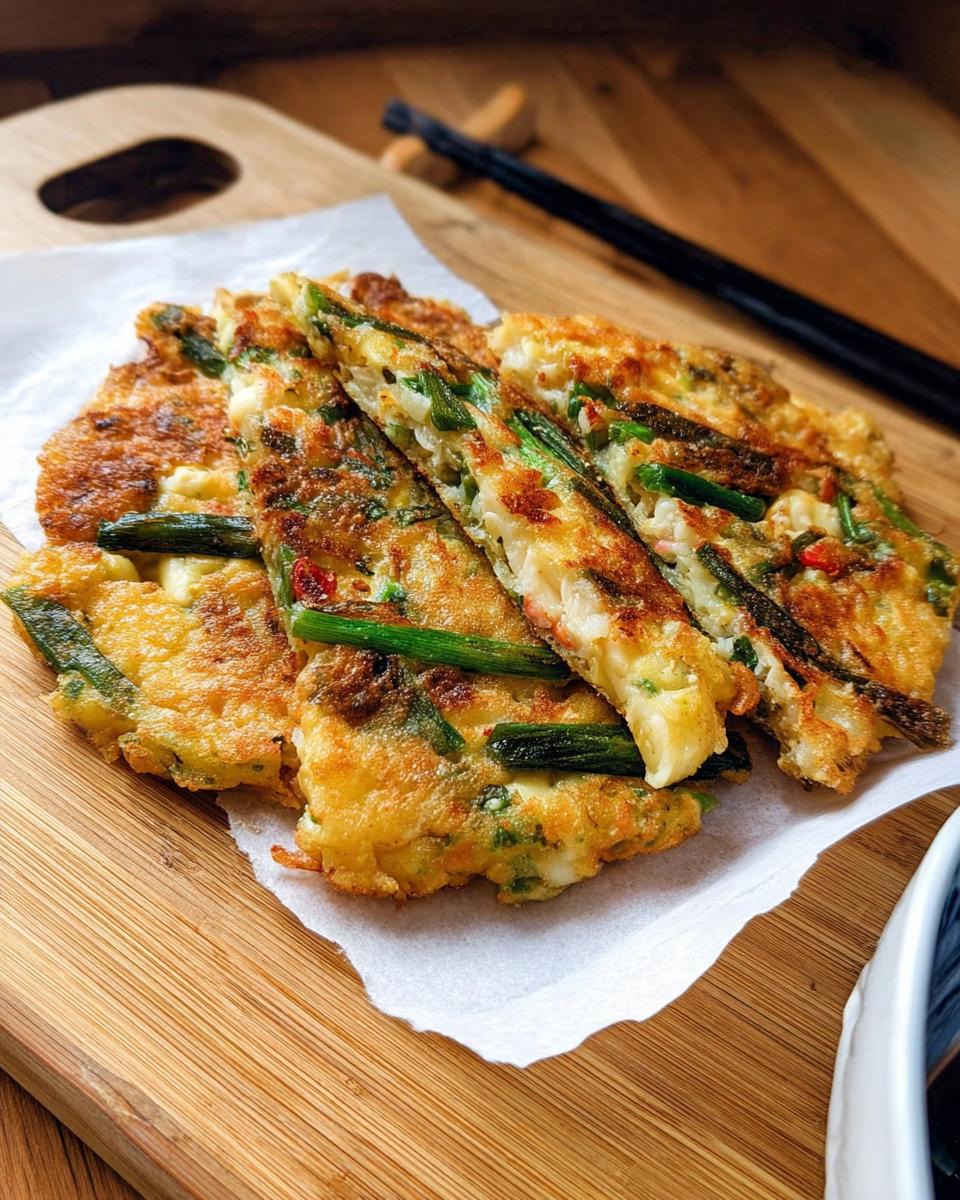
Why You’ll Love These Korean Pancakes (Pajeon)
Seriously, you’re going to adore making these Korean Pancakes (Pajeon)! Here’s why they’re a total winner:
- Super Easy to Make: Even if you’re new to Korean cooking, this recipe is totally doable.
- Bursting with Flavor: That savory seafood and onion combo? Absolute perfection!
- So Versatile: Serve them as a delightful appetizer or load them up for a satisfying main dish.
- That Crispy Texture: We’re talking golden, crispy edges and a perfectly chewy middle. Yum!
Gather Your Ingredients for Korean Pancakes (Pajeon)
Alright, let’s get down to business! To make these incredible Korean Pancakes (Pajeon), you’ll need a few things. Don’t skimp on the quality here – good ingredients truly make a difference in that final crispy, savory bite! Here’s what we’re working with:
For the Pancake Batter:
- 1 cup plain flour
- 1 Tbsp cornstarch (this is our secret weapon for crispiness!)
- 1 1/8 tsp fine salt
- 1 1/8 tsp garlic powder
- 1 1/8 tsp onion powder
- 1 cup water (icy cold or sparkling water makes it extra light!)
For the Topping:
- 12 green onion tops, cleaned and cut lengthways to fit your skillet (seriously, get them long enough to look pretty!)
- 100g calamari, cleaned and cut into little finger-sized pieces
- 100g prawns, cleaned and cut into smaller pieces (bite-sized is best!)
- A few sprinkles of ground black pepper (just to give the seafood a little zing)
- 1 egg, beaten (this helps bind everything together)
- 1 red chili, optional, thinly diagonally sliced (for a little pop of color and heat!)
For Cooking:
- About 6 Tbsp cooking oil (I love rice bran oil for its neutral flavor and high smoke point, you’ll need about 3 Tbsp per pancake)
Step-by-Step Guide to Making Korean Pancakes (Pajeon)
Alright, let’s get this magic happening! Making these Korean Pancakes (Pajeon) is surprisingly straightforward, even with all those yummy toppings. We’ve got about 15 minutes of prep, then roughly 20 minutes of cooking, plus a little time to let everything settle. Trust me, the sizzle and smell alone are worth it! If you’re looking for other amazing Korean-inspired dishes, you should check out this Potsticker Noodle Bowl recipe!
Preparing the Pancake Batter
First things first, let’s whip up that batter. Grab a medium bowl and whisk together your flour, cornstarch, salt, garlic powder, and onion powder. Now, here’s the secret to extra crispiness: pour in that icy cold water (or sparkling water, if you’re feeling fancy – it adds amazing bubbles!). Whisk it all up until it’s nice and smooth with no lumps. Pour this into a measuring jug so it’s super easy to pour into the pan later. Easy peasy!
Cooking the Korean Pancakes (Pajeon)
Okay, time to get that pan screaming hot! Drizzle about 3 tablespoons of your cooking oil into a frying pan and spread it around. Crank the heat up to high for about a minute until it’s nice and hot – be careful, it gets *hot*! You can test if the oil is ready by flicking a tiny drop of batter in; if it sizzles instantly, you’re golden. Turn the heat down just a touch to medium-high. Now, pour in just under half a cup of your batter and swirl the pan so it makes a nice, thin, even circle. Immediately lay your long green onion tops across the batter, side-by-side. Drizzle a little more batter over those onions to sort of “glue” them down. Reduce the heat to medium. Sparsely scatter your little pieces of calamari, prawns, and those optional red chili slices over the top. Finally, drizzle about half of your beaten egg all over. As it cooks, give the pan a little jiggle so the pancake doesn’t stick. After about 4 minutes, when the top looks mostly set, it’s time for the flip! If it looks a bit stuck, add a tiny bit more oil around the edges, then go for it. Press down gently with your spatula a few times – this is key for that ultimate crispiness! Cook for another 3 to 4 minutes until it’s a gorgeous golden brown. Carefully slide it onto a plate or cutting board. And don’t forget to repeat the whole oily, hot, pour, top, flip, and press dance for the second pancake! For more amazing tips on making Pajeon, I always love checking out this guide.
Serving Your Delicious Korean Pancakes
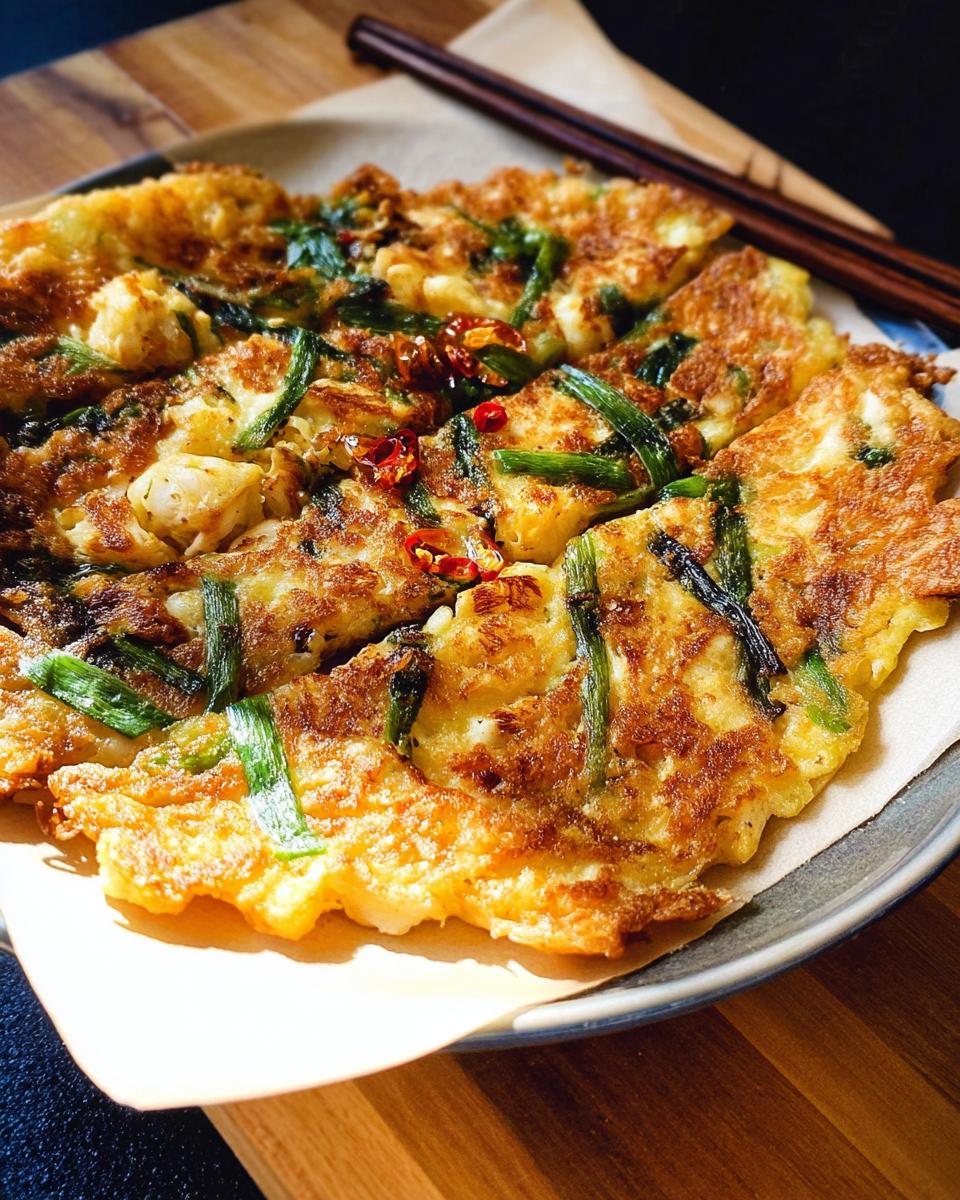
Once both glorious pancakes are perfectly golden and crispy, it’s time to serve! Slice them up into bite-sized wedges – perfect for sharing (or not!). Serve them immediately with your favorite Korean pancake dipping sauce. They’re best enjoyed hot off the pan!
Tips for Perfect Korean Pancakes (Pajeon)
Alright, let’s elevate your Pajeon game! Getting that perfect crispy texture is key, and it’s totally achievable right in your own kitchen. So, here are my little secrets:
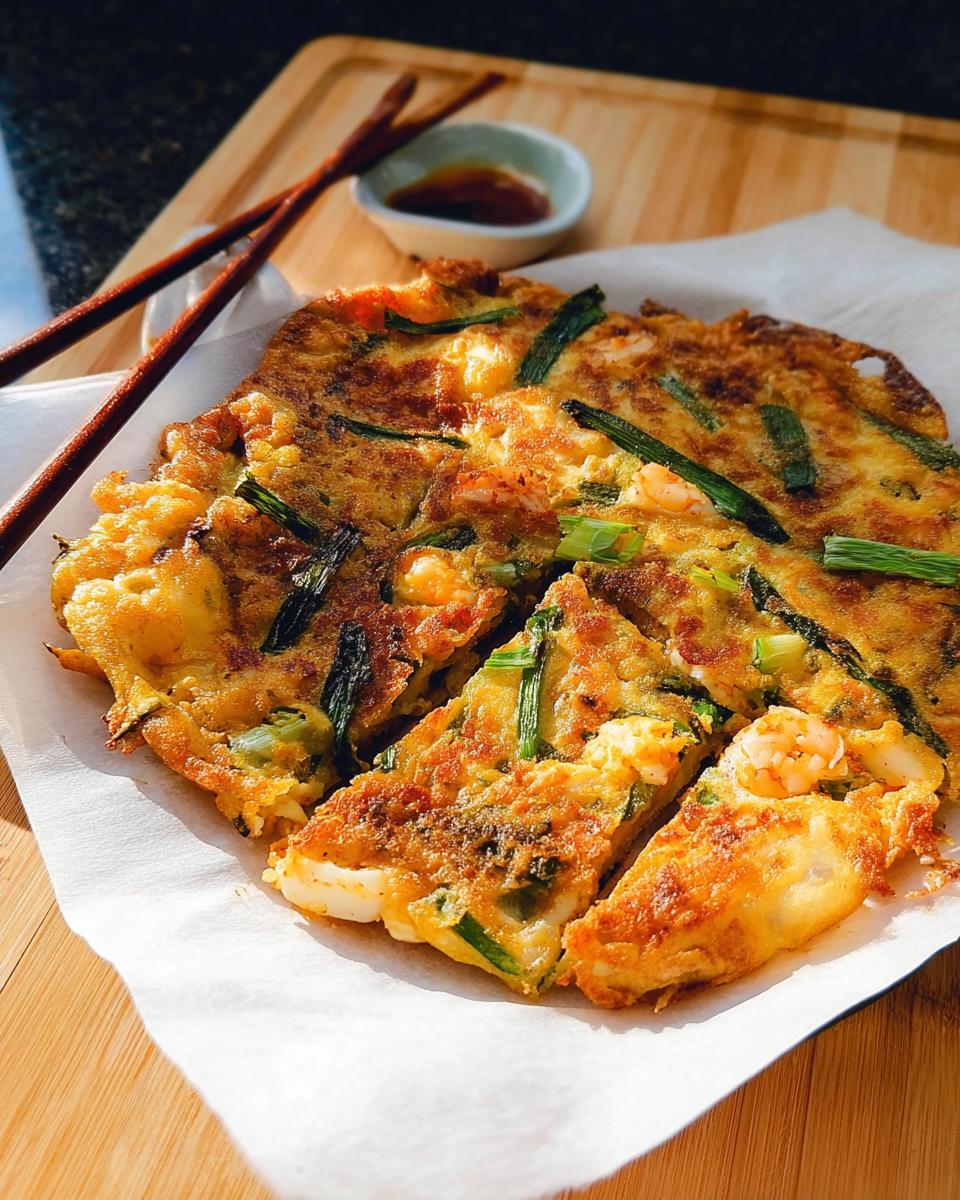
- The Right Pan Temp is EVERYTHING: Seriously, don’t rush this. Make sure that pan is nice and hot before the batter hits it. That initial sizzle is what starts the crisping process. Then, once the toppings are on, drop it to a medium heat so everything cooks through without burning. It’s a little dance, but you’ll get the hang of it!
- Thin & Even is the Way to Go: A thick pancake won’t get crispy all the way through. Spread that batter out nice and thin in the pan. Think of it as a canvas for those delicious toppings!
- Don’t Overcrowd the Toppings: While it’s tempting to pile everything on, a sparse distribution lets the pancake get crispy around the toppings. Less is more for that perfect balance.
- Press Down (Gently!): After you flip, giving the pancake a gentle press with your spatula helps flatten it slightly and ensures maximum contact with the hot oil, leading to ultimate crispiness.
- Oil, Oil, Oil! Yep, Pajeon loves a good amount of oil. Make sure you add enough around the edges to help it release and get that beautiful golden-brown color. If you’re curious about other tasty Korean dishes, this Korean Ground Beef Bowl is another family favorite!
Ingredient Notes and Substitutions for Pajeon
So, let’s chat about these ingredients for our Korean Pancakes, or Pajeon. These aren’t super fussy, but a couple of things really make a difference. That cornstarch? It’s our little secret weapon for getting that amazing crispiness we all love. It just fries up so beautifully!
Now, about the seafood – feel free to mix and match! If calamari and prawns aren’t your jam, or maybe you can’t find them, no worries. Shrimp and squid are classic, but you could totally use small pieces of fish like cod or even mussels. For a vegetarian Pajeon, just skip the seafood altogether! You can load it up with extra green onions, maybe some thinly sliced mushrooms, or even some kimchi for a spicy kick. Just make sure the pieces aren’t too big so they cook through nicely when you flip the pancake.
Frequently Asked Questions about Korean Pancakes
Got questions about whipping up some delicious Korean Pancakes (Pajeon)? I’ve totally got your back! Here are a few things people often ask:
Can I make Pajeon without seafood?
Absolutely! If seafood isn’t your thing, or you just want a simpler version, you can totally skip it. Just load up on extra green onions! You could also toss in some thinly sliced mushrooms or even some chopped kimchi for an extra burst of flavor. It’ll still be super tasty!
What’s the best dipping sauce for Korean pancakes?
Oh, the sauce is half the fun! A classic Korean pancake dipping sauce is a must. You can easily make one by whisking together some soy sauce, rice vinegar, a tiny bit of sugar, some sesame oil, and maybe a sprinkle of chili flakes or toasted sesame seeds. It’s savory, tangy, and just divine with the crispy pancake!
How do I store leftover Pajeon?
Honestly, Pajeon is best enjoyed fresh and crispy right off the pan. But if you do have leftovers, let them cool completely. Then, wrap them tightly in plastic wrap or store them in an airtight container in the fridge for a day or two. Reheating is a bit tricky – the microwave makes them soft, not crispy. Your best bet is to pop them in a hot oven or a toaster oven for a few minutes to bring back some of that crispiness. For more awesome Korean-inspired recipes, check out my Korean-Style Pot Roast!
Nutritional Information for Korean Pancakes (Pajeon)
Just a heads-up, the nutritional info below is an estimate, okay? It can totally change depending on the exact ingredients you use and how you cook them. But this gives you a good idea of what you’re working with for these yummy Korean Pancakes (Pajeon).
- Calories: 783
- Carbohydrates: 62g
- Protein: 29g
- Fat: 46g
- Saturated Fat: 4g
- Cholesterol: 324mg
- Sodium: 1773mg
- Potassium: 563mg
- Fiber: 4g
- Sugar: 3g
- Vitamin A: 1067 IU
- Vitamin C: 51mg
- Calcium: 175mg
- Iron: 6mg
Share Your Korean Pancakes (Pajeon) Creations!
Okay, now it’s your turn to shine! I seriously hope you try making these Korean Pancakes (Pajeon) – they’re just too good not to. If you do, please, please leave a comment below and let me know how they turned out! Rate it if you liked it, and if you snap any pictures of your masterpieces, tag me on social media. I absolutely love seeing your creations come to life! You can also reach out via my contact page if you have any questions!
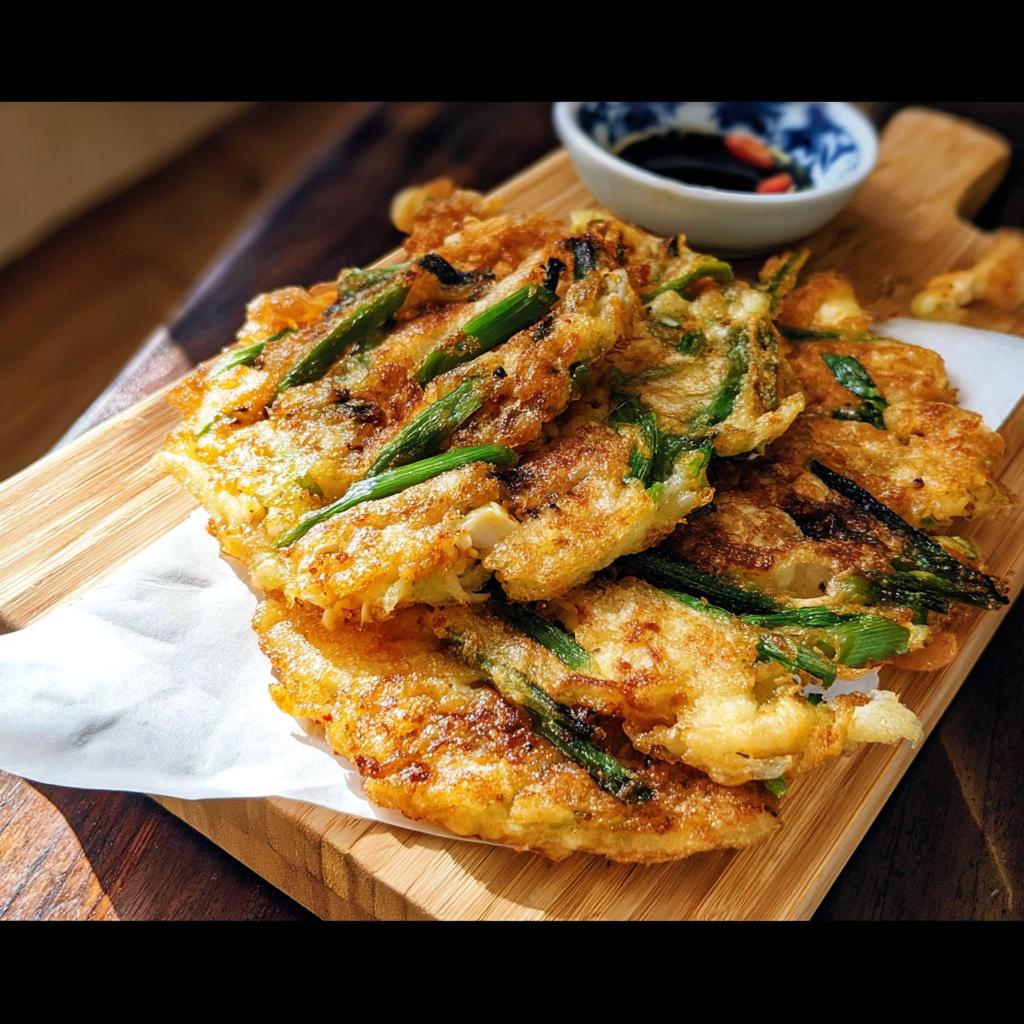
Korean Seafood and Green Onion Pancakes (Pajeon)
Ingredients
Equipment
Method
- In a medium-sized bowl, combine the flour, cornstarch, salt, garlic powder, and onion powder. Add the icy cold water and whisk well until smooth. Pour the batter into a measuring jug for easy pouring.
- Add about 3 tablespoons of cooking oil to a frying pan over medium heat. Spread the oil evenly. Increase the heat to high and preheat the pan until hot, about 1 minute. Be careful as the oil heats up.
- Test the oil by dropping a small amount of batter into the pan. If it sizzles, the oil is ready. Reduce the heat to medium-high. Pour just under half a cup of batter into the pan and spread it thinly and evenly.
- Arrange 6 green onion tops on top of the batter, parallel to each other. Pour a little more batter over and between the green onions to fill any gaps. Reduce the heat to medium.
- Sparingly place calamari, prawns, and red chilies (if using) over the green onions.
- Drizzle half of the beaten egg over the pancake. While it cooks, gently move the pancake in a circular motion to prevent sticking.
- Flip the pancake when the top is partially cooked, about 4 minutes. If needed, add more oil around the edges to help release it. Press the pancake with a spatula a couple of times to make it crispy. Cook for another 3 to 4 minutes. Transfer the pancake to a plate or cutting board.
- Repeat steps 2 to 7 with the remaining ingredients to make the second pancake.
- Slice the pancake into bite-sized pieces and serve with Korean pancake sauce.
Nutrition
Notes
Tried this recipe?
Let us know how it was!
Seasonal Keto Forager
My kitchen windowsill tells my story: mason jars filled with foraged wild mushrooms, elderflower cordial, and pickled ramps. Those childhood summers with my grandmother in Vermont, learning to identify edible plants, became my career when I realized most wild foods are already perfectly keto.
After my Environmental Science Master’s, I chose an unconventional path: rediscovering forgotten wild foods that naturally align with low-carb living. Why eat sad cauliflower when the forest is full of incredible flavors waiting to be sustainably harvested?
My seasonal collections follow nature’s rhythm—spring nettles, summer berries, autumn acorns, winter roots. My maple syrup alternative made from birch sap got national attention. I lead foraging workshops through the Appalachian Mountain Club, teaching sustainable wild food identification.
The earth provides everything we need if we remember how to listen—keto just helps us appreciate that nature got it right the first time.